
Table of Contents
- Why Concrete Decks Get Hot and What Temperature Matters
- Use Heat Reflective Concrete Paint to Lower Surface Temperature
- Install Shade Sails for Concrete Patios
- Apply Textured Acrylic Coatings and Reflective Sealers
- How to Lower Patio Surface Temperature With Breathable Materials
- Choose Light Colors and High Solar Reflectance Finishes
- Maintenance and Long-Term Cooling Performance
- Conclusion
Last Updated: August 15, 2026
Why Concrete Decks Get Hot and What Temperature Matters
Concrete absorbs and retains solar radiation, causing surface temperatures to soar far beyond the ambient air temperature on hot days. A concrete deck sitting in direct sunlight can reach 140-160°F or higher, making it painful or impossible to walk on barefoot. This heat buildup isn’t just uncomfortable, it affects the longevity of your deck, accelerates deterioration of sealers and coatings, and creates an inhospitable environment around your pool area.
At Pool Decks R Us, we work with homeowners and property managers who face this challenge every summer. The core issue is that concrete has high thermal mass and low reflectivity, meaning it absorbs most of the solar radiation hitting it rather than reflecting it away. Understanding this principle is essential because it shapes every cooling strategy that actually works.
The good news: you don’t have to accept a scorching deck. Multiple proven methods can reduce surface temperature by 20-40°F or more, depending on which approach you choose and your local climate. The key is matching the right solution to your situation, your budget, the deck’s current condition, how much maintenance you’re willing to do, and whether you want a temporary fix or a permanent one.
This guide covers seven proven methods to cool down concrete deck surfaces, from simple maintenance practices to professional resurfacing. We’ll walk through each approach, explain how it works, and help you decide which combination makes sense for your property.
Use Heat Reflective Concrete Paint to Lower Surface Temperature
Heat reflective concrete paint is one of the most accessible ways to reduce surface temperature. These coatings contain reflective pigments, typically ceramic or acrylic-based, that bounce solar radiation away from the concrete rather than allowing it to be absorbed. The result is a measurable drop in surface temperature, often 15-25°F compared to untreated concrete.
The paint works by increasing the solar reflectance of the surface. Standard concrete has a solar reflectance value around 0.35-0.40, meaning it absorbs 60-65% of incoming solar energy. Quality reflective coatings can raise this to 0.60-0.75 or higher, dramatically shifting the thermal balance. This is why light-colored coatings outperform dark ones, they simply reflect more of the spectrum.
Application is straightforward for DIY work. You’ll need to clean the deck thoroughly, remove any loose material, and allow it to dry completely. Most reflective paints apply with a standard roller or brush, similar to deck stain. Curing time typically ranges from 24-48 hours before the deck is safe to use. The coating creates a protective barrier that also resists UV damage and helps prevent moisture penetration.
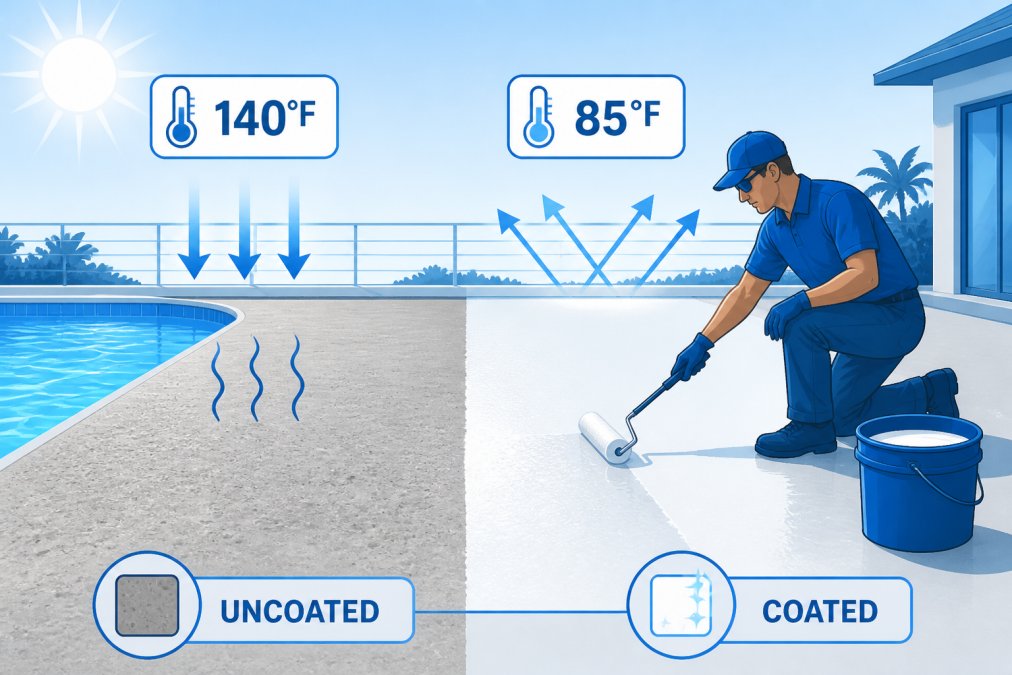
The durability of reflective paint depends on foot traffic, weather exposure, and maintenance. Most quality coatings last 3-5 years before needing reapplication, though high-traffic areas may require touch-ups sooner. One thing to watch for: reflective paint can become slippery when wet. If slip resistance is a concern, look for formulations with grit additives built in, or apply a non-slip additive after the base coat cures.
Reflective paint works best on relatively sound concrete. If your deck has significant cracks, spalling, or structural damage, the paint will fail prematurely. Address underlying damage first, Pool Decks R Us can assess whether your deck needs repair before coating.
Install Shade Sails for Concrete Patios
Shade structures prevent solar radiation from reaching the concrete surface in the first place. Shade sails, tensioned fabric structures anchored to posts or walls, are one of the most effective and flexible cooling solutions. By blocking 80-95% of direct sunlight, they reduce surface temperature by 30-40°F or more, often bringing the deck to near-ambient temperature in the shaded area.
The cooling effect is immediate and dramatic. Unlike coatings that reduce heat absorption, shade sails eliminate the heat source entirely. This makes them ideal for pool decks where comfort is the priority. You’ll notice the difference the moment you step into the shade.
Installation requires planning. You’ll need anchor points, posts sunk into concrete footings, wall-mounted hardware, or existing structures like pergolas. Shade sails typically span 12-20 feet and are available in various colors. White or light gray sails provide maximum cooling; darker colors absorb more heat but offer aesthetic options. The fabric is usually high-tensile polyester or HDPE, designed to withstand UV exposure and weather without degrading.
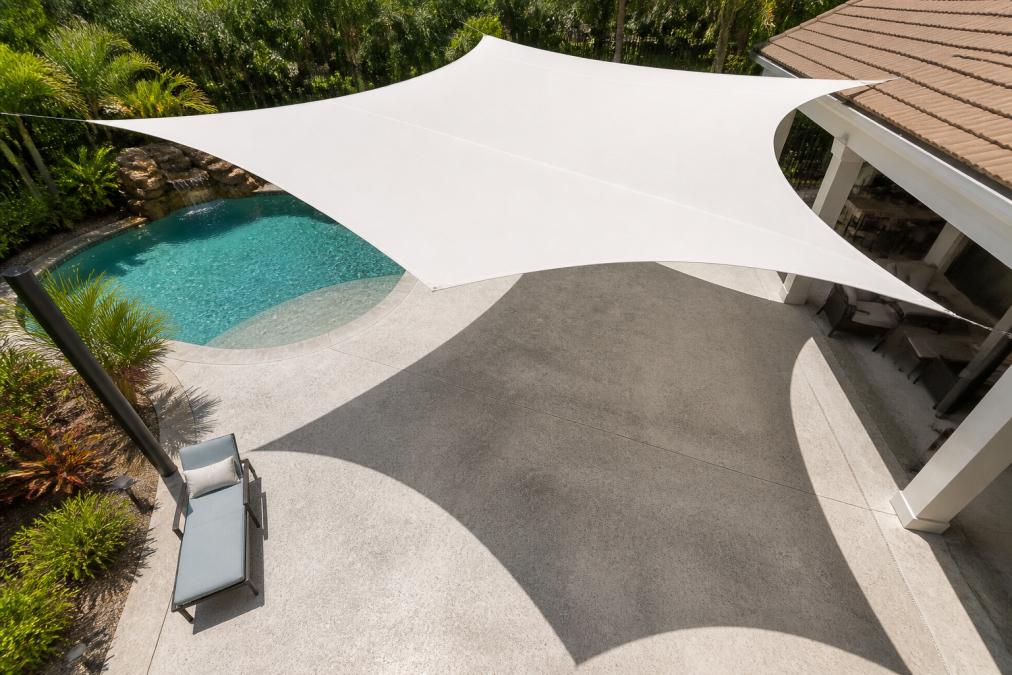
The main trade-off with shade sails is that they only cool the area directly beneath them. If you want full-deck coverage, you’ll need multiple sails or a larger structure, which increases cost and complexity. Installation typically requires professional help to ensure proper tensioning and structural safety. However, once installed, shade sails require minimal maintenance, occasional cleaning to remove debris and inspection of anchor points.
Shade sails deliver the fastest, most dramatic temperature reduction. They’re ideal for creating comfortable lounging areas and reducing deck stress during peak heat hours.
Apply Textured Acrylic Coatings and Reflective Sealers
Textured acrylic coatings and reflective sealers go beyond simple paint. These products combine reflectivity with texture, creating a surface that bounces heat away while providing improved slip resistance and durability. The textured finish also has aesthetic appeal, it can give your deck a finished, professional appearance.
Acrylic coatings bond to the concrete substrate more effectively than paint, creating a more durable protective layer. The texture comes from fine aggregate particles suspended in the coating. As it cures, these particles remain on the surface, creating a slightly rough finish that improves traction even when wet. This addresses a common complaint: reflective surfaces can be slippery.
Reflective sealers are similar but typically thinner and designed to enhance the deck’s natural appearance while adding a protective layer. They’re popular for decks where you want to preserve the concrete’s look while gaining cooling and durability benefits. The reflectivity boost comes from ceramic or silica particles that reflect light without dramatically changing the deck’s color.
Application requires proper surface preparation. The concrete must be clean, dry, and free of loose material. Some products require a primer coat. Most textured acrylics and reflective sealers apply with a roller and typically require 48-72 hours curing time before heavy use. Multiple coats may be recommended for optimal reflectivity and durability.
The lifespan of these coatings is typically 5-7 years in high-traffic areas, longer in lower-traffic zones. They’re more resistant to UV degradation than basic paint and handle moisture better. However, they’re also more expensive, both in material cost and often in installation, since proper application is more technical than basic paint.
Improper application of textured coatings can lead to uneven coverage, poor adhesion, and premature failure. If you’re unsure about DIY application, professional installation ensures the coating performs as intended and lasts the full expected lifespan.
How to Lower Patio Surface Temperature With Breathable Materials
Breathable rugs and runners designed for outdoor use can reduce surface temperature in specific areas while adding comfort and aesthetic appeal. These materials, typically made from synthetic fibers like polypropylene or natural fibers like jute, allow air circulation while blocking direct solar contact with the concrete.
Outdoor rugs don’t cool the entire deck, but they create comfortable zones. A quality breathable rug reduces surface temperature in the covered area by 15-25°F by blocking solar radiation and allowing air movement underneath. This makes them ideal for seating areas, lounging zones, or high-traffic pathways where barefoot comfort matters most.
The advantage of rugs is flexibility. You can reposition them seasonally, move them as needed, or remove them entirely. They’re also reversible, if one side becomes worn or faded, you can flip it. This makes them a low-commitment cooling strategy.
Maintenance is straightforward. Most outdoor rugs can be vacuumed, hosed down, or spot-cleaned with mild soap and water. They should be allowed to dry completely before rolling up to prevent mildew. In high-moisture environments like pool decks, ensure adequate air circulation underneath to prevent moisture buildup.
The trade-off: rugs cover only a portion of the deck and don’t address the underlying heat problem. They’re best used in combination with other methods, for example, pairing a breathable rug in your seating area with reflective paint on the rest of the deck creates a comfortable, cooler environment throughout.
Choose Light Colors and High Solar Reflectance Finishes
Color is one of the most powerful tools for controlling surface temperature. Light colors reflect solar radiation; dark colors absorb it. This isn’t just an aesthetic choice, it’s a thermal one. The difference between a dark gray deck and a light gray deck can be 30-40°F in surface temperature on a hot day.
Solar reflectance is measured on a scale from 0 to 1, where 1 represents perfect reflection (no heat absorption) and 0 represents perfect absorption (all heat absorbed). Standard concrete ranges from 0.35-0.40. Light-colored finishes, whites, creams, light grays, and pale earth tones, typically achieve 0.60-0.75 or higher. This dramatic shift in reflectance translates directly to cooler surfaces.
When choosing a finish, consider both color and material. A white acrylic coating will be cooler than white paint because the acrylic’s texture and composition enhance reflectivity. Similarly, light-colored reflective sealers outperform plain light paint because the ceramic particles in the sealer actively bounce radiation away.
There’s also a practical consideration: light colors show dirt and stains more readily than dark ones. This means more frequent cleaning is required to maintain both appearance and reflectivity. Dust, algae, and debris reduce reflectance, so regular maintenance is essential if you want to keep the cooling benefit.
Light colors with high solar reflectance are best for homeowners and property managers who prioritize heat reduction and are willing to commit to regular cleaning and maintenance.
Maintenance and Long-Term Cooling Performance
The cooling performance of any surface treatment depends on ongoing maintenance. Reflectivity degrades over time as dust, algae, mineral deposits, and weathering reduce the surface’s ability to reflect solar radiation. A coating that starts at 0.70 reflectance can drop to 0.50 or lower within a few years if not maintained.
Regular cleaning is the most important maintenance task. For reflective coatings and light-colored surfaces, quarterly cleaning with a pressure washer (at moderate pressure to avoid damage) removes accumulated debris and restores reflectivity. For textured surfaces, pay attention to the grooves where dirt accumulates. A soft-bristled brush and mild detergent often work better than high pressure for textured finishes.
Inspect your deck annually for signs of coating failure, peeling, cracking, or blistering. These issues allow moisture to penetrate beneath the coating, accelerating deterioration. Small repairs are much cheaper than full recoating. If you notice areas where the coating is failing, address them promptly before they spread.
For shade structures like sails, inspect anchor points and hardware annually. Look for rust, loose fasteners, or signs of stress on the fabric. Tension may need adjustment over time as the fabric settles or weather conditions change. A professional inspection every 2-3 years ensures the structure remains safe and effective.
Seasonal considerations matter. In humid climates, allow extra drying time after rain before using the deck. In dry climates, dust accumulation happens faster, requiring more frequent cleaning. In areas with significant freeze-thaw cycles, ensure your coating is rated for those conditions, some products crack or peel when exposed to repeated freezing and thawing.
Maintenance isn’t optional, it’s the difference between a cooling solution that works for 5+ years and one that fails within 2-3 years. Budget time and resources for regular cleaning and inspections.
Conclusion
Cooling down a concrete deck requires matching the right strategy to your situation. Reflective coatings offer an affordable, DIY-friendly option that works for most homeowners. Shade structures deliver the fastest temperature reduction and work in any climate. Breathable rugs create comfortable zones without permanent modifications. Light colors and high solar reflectance finishes reduce heat absorption across your entire deck surface.
The most effective approach often combines multiple methods. For example, installing shade sails over your main lounging area, applying reflective paint to the rest of the deck, and using breathable rugs in high-traffic zones creates a comprehensively cooler environment.
If your deck has structural damage, cracks, or existing coating failure, professional assessment is worth the investment. Pool Decks R Us specializes in concrete pool deck repairs and resurfacing, handling everything from structural repairs to professional application of reflective coatings. Our in-house crew ensures lasting results, we get the foundation right before applying any cooling solution, so your investment lasts.
Get A Quote from Pool Decks R Us today and let our team assess your deck’s condition and recommend the best cooling strategy for your property.
Frequently Asked Questions
What can I put on concrete to make it cooler?
The most effective solutions are heat reflective concrete paint, light-colored acrylic coatings with high solar reflectance, and reflective sealers that bounce infrared radiation away from the surface. Breathable outdoor rugs and shade structures like pergolas or shade sails also reduce surface temperature significantly. Textured finishes improve foot comfort by reducing heat absorption. For best results, combine multiple methods: apply a reflective coating, add shade coverage, and use breathable materials on high-traffic areas.
How much does it cost to cool down a concrete deck?
Costs vary based on deck size, the cooling method you choose, and whether you handle installation yourself or hire professionals. DIY reflective coatings and outdoor rugs are budget-friendly starting points. Shade structures and professional coating applications cost more but deliver longer-lasting results. For an accurate estimate tailored to your specific deck, contact Pool Decks R Us for a free quote, we'll assess your deck's condition and recommend the best solution for your budget.
Do light-colored concrete coatings actually reduce surface temperature?
Yes. Light-colored coatings with high solar reflectance values reflect more infrared radiation and UV light away from the concrete surface, preventing heat absorption. Acrylic coatings and reflective sealers with light finishes can reduce surface temperature by 15-25 degrees or more compared to dark concrete. The reflectivity effect is most noticeable in direct sunlight. Textured finishes further enhance cooling by improving air circulation and reducing the material's ability to retain heat.
Can I use shade structures to lower concrete surface temperatures?
Absolutely. Shade sails, pergolas, and other structures block direct sunlight from reaching the concrete, which is the primary cause of heat buildup. Shade structures can reduce surface temperature by 20-30 degrees by preventing solar radiation from hitting the deck. They're especially effective during peak sun hours. For maximum cooling, combine shade structures with reflective coatings or light-colored finishes, the combination addresses both solar radiation and any residual heat absorption.
This article was written using GrandRanker