
Table of Contents
- Concrete Solutions vs Pool Deck Resurfacing: Key Differences
- Pool Deck Resurfacing vs Replacement: When to Repair vs Rebuild
- Concrete Pool Deck Repair: Addressing Cracks and Surface Damage
- Pool Deck Resurfacing Cost: What Affects Your Project Budget
- Material Options: Coatings, Finishes, and Heat-Resistant Solutions
- Durability and Maintenance: Long-Term Performance Expectations
- Choosing the Right Contractor for Your Pool Deck Project
- Conclusion
Last Updated: August 19, 2026
Concrete Solutions vs Pool Deck Resurfacing: Key Differences
When your pool deck starts showing its age, you face a fundamental choice: repair what’s there or rebuild from scratch. This decision hinges on understanding the difference between concrete pool deck resurfacing and broader concrete solutions. Pool deck resurfacing targets the surface layer, applying new coatings, finishes, or overlays to restore appearance and functionality without removing the underlying structure. Concrete solutions, by contrast, encompass the full spectrum of repairs, from crack filling and structural fixes to complete demolition and replacement.
The distinction matters because it determines your timeline, budget, and long-term durability. Pool Decks R Us helps homeowners and commercial property managers navigate this exact choice. The key is understanding what your deck actually needs before committing to a solution.
Resurfacing works when the structural integrity is sound and surface damage is cosmetic or shallow. It’s faster, less disruptive, and typically more affordable than replacement. Concrete solutions become necessary when cracks penetrate deep, the base has settled unevenly, or the entire slab has deteriorated beyond cosmetic repair. The wrong choice wastes money; the right one restores safety and extends your deck’s life by years.
Pool Deck Resurfacing vs Replacement: When to Repair vs Rebuild
The decision between resurfacing and replacement depends on three factors: the extent of structural damage, the age of the existing deck, and your budget constraints.
Resurfacing makes sense when:
The concrete base remains structurally sound, even if the surface is cracked or discolored. Minor cracks (hairline to quarter-inch wide) can be sealed before resurfacing. The deck has settled evenly without significant pooling or uneven sections. Surface deterioration like spalling, flaking, or fading is the primary complaint. You need the work completed quickly, resurfacing typically takes days rather than weeks.
Replacement becomes necessary when:
Deep structural cracks run through the slab, indicating movement or base failure. The deck has settled unevenly, creating trip hazards or water pooling that resurfacing cannot fix. Extensive spalling or deterioration suggests the concrete has lost structural integrity. Multiple failed repair attempts indicate the underlying problem hasn’t been addressed. The deck is over 25-30 years old and shows widespread damage across multiple areas.
Pool Decks R Us evaluates each deck individually because the line between repair and replacement isn’t always clear-cut. A contractor’s honesty matters here, some will recommend full replacement to maximize revenue, while others might oversell resurfacing for a quicker job. The right approach depends on your deck’s actual condition, not the contractor’s preference.
Cost comparison typically shows resurfacing at a fraction of replacement expense, but that advantage disappears if resurfacing fails within a few years because the underlying problem wasn’t addressed. A thorough inspection before deciding prevents costly mistakes.
Concrete Pool Deck Repair: Addressing Cracks and Surface Damage
Concrete cracks fall into categories based on width, depth, and cause. Understanding the type of damage you’re facing determines whether repair or resurfacing is appropriate.
Hairline cracks (less than one-eighth inch) are cosmetic and typically don’t indicate structural failure. These respond well to crack sealers, flexible materials that prevent water infiltration without requiring removal of concrete. Wider cracks (one-eighth to one-quarter inch) need more aggressive treatment. Professionals use crack filler or polyurethane sealants that expand and contract with temperature changes, a critical consideration in Florida’s climate where freeze-thaw cycles are less common but thermal expansion remains significant.
Spalling occurs when the concrete surface flakes or chips away, exposing the aggregate beneath. This happens when water penetrates the surface, freezes, and expands, or when salt exposure degrades the concrete’s outer layer. Spalling repair involves removing loose concrete, cleaning the area thoroughly, and applying a concrete patch or resurfacer. If spalling covers more than 30 percent of the deck surface, resurfacing becomes more cost-effective than patching individual spots.
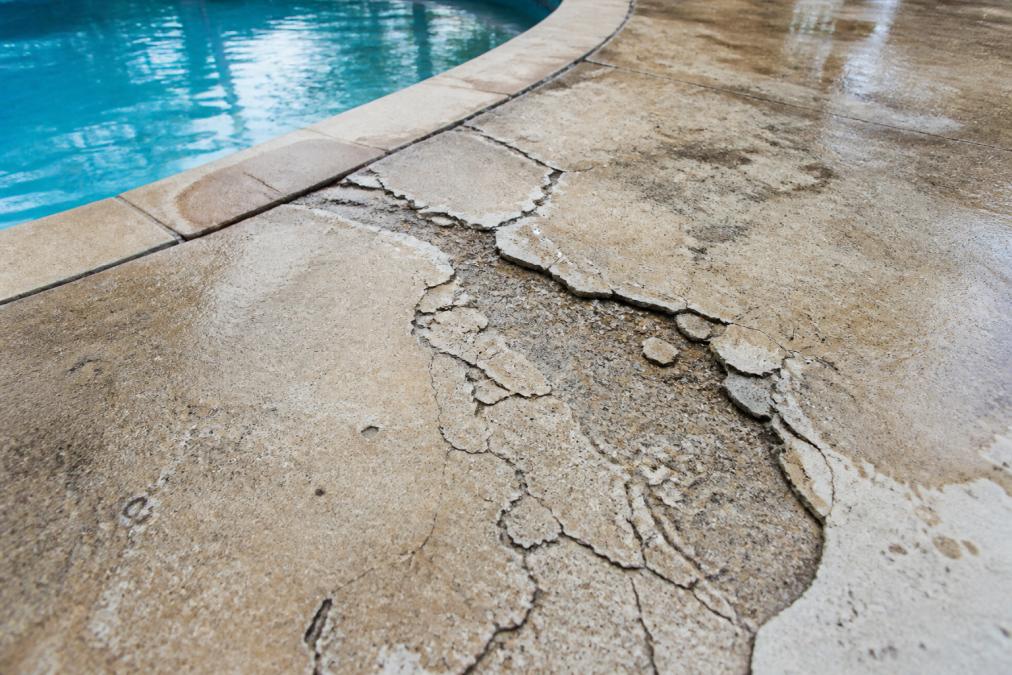
Structural cracks, those running deep through the slab or following a pattern, indicate movement or settlement. These require investigation into the cause before repair. Poly-leveling, a technique that injects expanding foam beneath the concrete, can lift settled sections back to level. This approach avoids full replacement while addressing the underlying problem. However, poly-leveling works best on relatively recent settlement; older, stabilized cracks may not respond.
The substrate preparation phase determines whether repairs last. Concrete must be thoroughly cleaned, all loose material removed, and the surface properly prepared before any coating or resurfacing product is applied. This step is often where corners get cut, leading to premature failure. Professional contractors understand that substrate preparation typically consumes 40-50 percent of the project timeline because it’s unglamorous but absolutely essential.
Pool Deck Resurfacing Cost: What Affects Your Project Budget
Several variables influence the final cost of pool deck resurfacing, and understanding them helps you evaluate contractor quotes fairly.
Square footage is the primary driver. Larger decks cost more in absolute terms, but per-square-foot pricing often decreases at scale. A 300-square-foot deck and a 1,000-square-foot deck may not scale linearly in price because setup, mobilization, and overhead are distributed differently.
Surface condition affects labor intensity. A deck with minimal damage requires less substrate preparation than one with extensive cracks, spalling, or uneven settling. Contractors should itemize prep work separately so you understand what’s included in the quote.
Material selection varies significantly in cost and performance. Basic concrete resurfacer is the most affordable option. Polyaspartic coatings and epoxy flake systems cost more but offer superior durability, slip resistance, and aesthetic appeal. Heat-reflective finishes command a premium but address a real problem in Florida, concrete that becomes too hot to walk on barefoot in summer.
Timeline and scheduling can affect pricing. Rushing a job or requiring work during peak season may increase costs. Conversely, scheduling during slower periods sometimes yields discounts.
Site accessibility matters. Decks accessible by vehicle cost less to service than those requiring hand-carrying materials through a home. Decks with tight spaces or complex shapes increase labor time.
Curing and weather introduce variables. Many modern coatings cure quickly, but environmental conditions, humidity, temperature, and rain, affect the process. Projects scheduled during unfavorable weather windows may require additional time or rework.
Pool Decks R Us provides transparent quotes that break down these components so you understand where your investment goes. Vague quotes that lump everything into a single price per square foot hide the actual scope of work.
Material Options: Coatings, Finishes, and Heat-Resistant Solutions
The resurfacing material you choose determines durability, appearance, slip resistance, and long-term maintenance requirements.
Concrete resurfacer is the most basic option, a cement-based overlay applied to the existing deck. It’s affordable and provides a fresh surface, but offers limited durability and aesthetic options. Resurfacers work best as a temporary solution or for decks with minimal use. They require regular sealing and are prone to cracking if the underlying concrete continues to move.
Polyaspartic coatings represent a significant upgrade in performance. These UV-stable, fast-curing systems resist yellowing, staining, and chemical damage far better than epoxy. Polyaspartic coatings cure in hours rather than days, minimizing downtime. They handle Florida’s intense sun without fading and provide excellent slip resistance when textured. The trade-off is higher upfront cost compared to basic resurfacers.
Epoxy flake flooring combines durability with visual appeal. Colored vinyl flakes broadcast onto epoxy create a granite-like appearance that hides concrete imperfections. A UV-stable polyaspartic topcoat seals the system. Flake systems are highly slip-resistant and extremely durable, making them popular for commercial pools and high-traffic residential decks. Installation requires meticulous surface preparation and professional application to avoid premature failure.
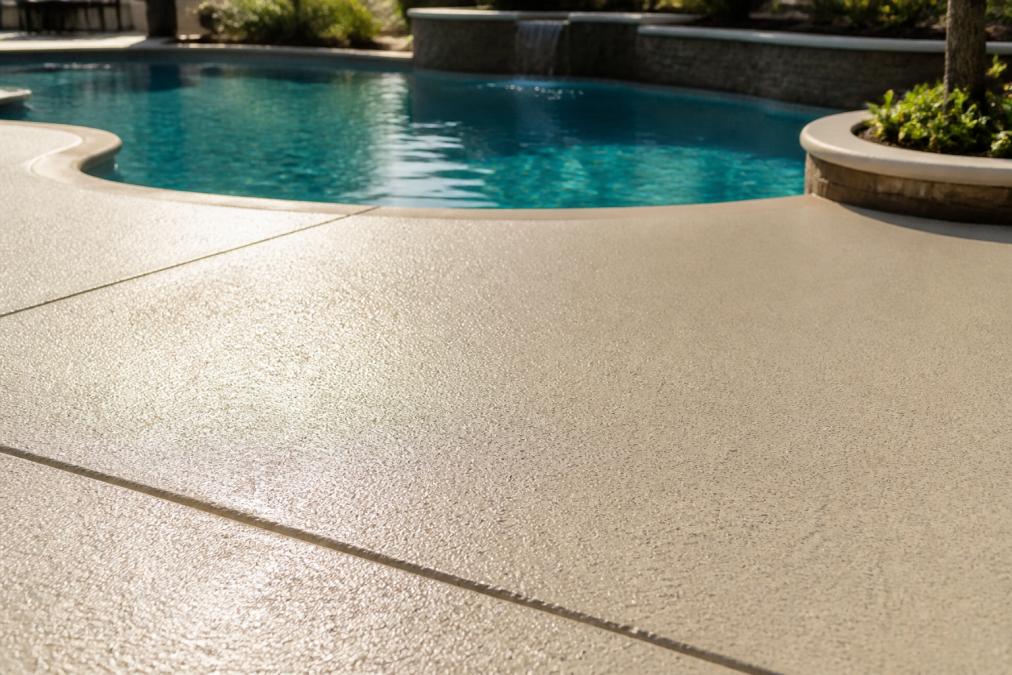
Heat-reflective finishes address a specific Florida problem, concrete that becomes uncomfortably hot in direct sun. These coatings use light-colored pigments and reflective additives to reduce surface temperature by 10-20 degrees Fahrenheit compared to standard concrete. They’re particularly valuable for decks used frequently in summer or for commercial facilities where barefoot comfort is important.
Stamped or textured concrete adds visual interest while improving slip resistance. Stamping creates patterns that mimic stone, brick, or tile. Texture application varies from subtle knockdown finishes to aggressive aggregate exposure. Both improve grip and reduce glare compared to smooth concrete.
Sealers protect the underlying concrete or coating from UV damage, water infiltration, and chemical staining. Quality sealers extend the life of resurfaced decks significantly. Many contractors include sealing in their resurfacing package, but confirm this is part of the quote, it shouldn’t be an afterthought.
Material selection should align with your deck’s use, climate exposure, and maintenance tolerance. A rarely-used residential deck might justify a basic resurfacer, while a commercial pool with heavy daily traffic demands the durability of polyaspartic or epoxy systems.
Durability and Maintenance: Long-Term Performance Expectations
How long your resurfaced deck lasts depends on the material chosen, installation quality, and maintenance discipline.
Basic concrete resurfacers typically last 3-5 years before cracking and deterioration become noticeable. They require annual sealing and are vulnerable to spalling in areas with freeze-thaw cycles or salt exposure. This short lifespan makes them a poor choice for decks in harsh environments or high-use settings.
Polyaspartic coatings commonly last 7-10 years with proper maintenance. UV stability means they resist fading and chalking far better than epoxy alone. They handle chemical exposure well and maintain slip resistance through multiple seasons. Maintenance involves periodic cleaning and resealing every 2-3 years depending on sun exposure.
Epoxy flake systems deliver 8-12 years of performance when installed correctly and maintained properly. The topcoat protects the flakes and epoxy base from UV damage. These systems are highly resistant to stains and chemicals, making them ideal for commercial pools. Maintenance includes regular cleaning and occasional topcoat renewal.
Stamped or textured concrete lasts as long as the underlying slab if properly sealed. The texture itself doesn’t degrade, but the sealer does. Resealing every 2-3 years keeps the surface protected and maintains slip resistance. Stamped finishes hide imperfections well, reducing the appearance of minor cracks and wear.
Maintenance consistency determines whether your deck reaches its expected lifespan. Decks sealed annually and cleaned regularly last significantly longer than those neglected. Florida’s intense sun, salt air near coastal areas, and frequent rain all accelerate deterioration if the protective coating isn’t maintained.
Pool Decks R Us emphasizes upfront honesty about maintenance requirements because this often determines customer satisfaction. A coating that requires quarterly cleaning isn’t suitable for someone who wants a low-maintenance deck.
Choosing the Right Contractor for Your Pool Deck Project
Contractor selection determines whether your resurfacing investment delivers lasting results or fails prematurely.
In-house crews versus subcontractors matter more than most homeowners realize. Contractors who maintain their own crews have direct control over quality, timeline, and accountability. Subcontractors introduce layers of separation that can lead to communication failures and finger-pointing when problems arise. Pool Decks R Us operates with an in-house team specifically because direct oversight ensures consistency and quality control.
Experience with local conditions is essential. A contractor familiar with Orlando’s climate, soil conditions, and weather patterns understands substrate preparation requirements and material selection better than someone learning on your project. Ask how long the contractor has operated locally and request references from similar projects.
Written contracts and warranties protect you. A detailed contract specifies scope, timeline, materials, and payment terms. Warranties should cover both labor and materials for a defined period. Be wary of contractors who avoid written agreements or offer vague warranties.
Inspection and communication before work begins prevents surprises. The contractor should conduct a thorough evaluation, explain findings clearly, and answer questions about the proposed solution. If a contractor dismisses your concerns or rushes through the assessment, that’s a red flag.
References and reviews provide insight into how contractors handle real projects. Ask for references from recent jobs and follow up with actual phone calls. Online reviews offer perspective, but prioritize direct conversations with past customers about timeline adherence, quality, and professionalism.
Transparency about costs separates honest contractors from those hiding expenses. A detailed quote breaks down materials, labor, prep work, and any additional services. Vague quotes that lump everything together make it impossible to compare proposals fairly.
Conclusion
The choice between resurfacing and broader concrete solutions isn’t one-size-fits-all. Your deck’s condition, your timeline, and your budget all influence the right decision. Pool Decks R Us helps homeowners and commercial property managers make this choice with honest evaluation and quality workmanship. Our in-house crew handles everything from structural crack repairs to complete deck resurfacing, ensuring lasting results without subcontractor complications. Get a quote from Pool Decks R Us and discover how professional assessment and transparent pricing can transform your pool deck from a liability into an asset.
Frequently Asked Questions
What is the difference between pool deck resurfacing and full replacement?
Pool deck resurfacing repairs the existing concrete surface by cleaning, repairing cracks, and applying new coatings or finishes. Replacement removes and rebuilds the entire deck structure. Resurfacing works when the underlying concrete is structurally sound but damaged on the surface. If the concrete is severely cracked, settling, or structurally compromised, replacement may be necessary. Resurfacing is typically faster and less expensive than full replacement.
How much does pool deck resurfacing cost compared to replacement?
Pool deck resurfacing cost depends on deck size, damage severity, material choice, and surface preparation needs. Resurfacing is generally 40-60% less expensive than full replacement because it preserves the existing structural base. Polyaspartic coatings run $6-$12 per square foot, while epoxy flake systems cost around $5.50 per square foot. Full replacement requires demolition, new concrete pouring, and finishing, making it significantly more costly. Request a quote from a local contractor for accurate pricing on your specific project.
What concrete pool deck repair methods work best for deep cracks?
Deep cracks require substrate preparation before resurfacing can succeed. Contractors clean and widen cracks, fill them with appropriate crack fillers or polyurethane sealants, and level the surface through poly-leveling or self-leveling compounds. Once the substrate is properly prepared and cured, a protective coating is applied. If cracks indicate structural settlement or movement, those underlying issues must be addressed first. A professional inspection determines whether repair is viable or if replacement is necessary.
How long does a resurfaced pool deck last?
A properly resurfaced pool deck typically lasts 5-10 years, depending on material choice and maintenance. Polyaspartic coatings resist UV degradation better than epoxy, extending lifespan in Florida's intense sun. Regular sealing and cleaning prevent moisture penetration and surface deterioration. In harsh climates with heavy use, heat-reflective finishes and quality topcoats perform better. Professional installation and proper substrate preparation directly impact longevity, which is why contractor selection matters.
What should I look for when hiring a pool deck contractor?
Choose a contractor with in-house crews rather than subcontractors, ensuring direct accountability and quality control. Verify experience with residential and commercial pool deck projects in your area. Ask for references and inspect past work. Honest contractors recommend repair when resurfacing suffices and replacement only when necessary. Confirm they understand local climate challenges, offer heat-reflective and slip-resistant options, and provide clear timelines and warranties. Request a detailed quote and ask about their substrate preparation process.
This article was written using GrandRanker