Table of Contents
- What Affects Pool Deck Resurfacing Cost
- Pool Deck Coating Options and Their Durability
- Best Pool Deck Materials for Heat Resistance
- Pool Deck Resurfacing Timeline: What to Expect
- Concrete Pool Deck Repair Cost Breakdown
- Signs Your Pool Deck Needs Resurfacing
- Maintenance Tips for Long-Term Durability
- Permitting and HOA Considerations
Last Updated: August 18, 2026
What Affects Pool Deck Resurfacing Cost
Pool deck resurfacing cost depends on square footage, labor intensity, surface condition, and coating materials. Understanding these variables helps you avoid budget surprises and make informed decisions about your project.
Square Footage and Labor
Your deck’s total square footage is the primary cost driver. Labor represents a substantial portion of the budget because surface preparation is labor-intensive work. A 400-square-foot residential deck requires different labor investment than a 2,000-square-foot commercial pool area. Larger projects sometimes benefit from efficiency gains, but smaller decks may have higher per-square-foot labor costs due to setup and mobilization.
Professional contractors with in-house crews typically deliver more consistent results because the same team handles every phase, reducing rework and ensuring quality standards remain constant. The time required depends heavily on your deck’s current condition.
Surface Condition and Preparation
A deck with minor surface wear requires far less preparation than one with deep cracks, spalling concrete, or previous failed coatings. Surface preparation can consume 40-60% of total project time, making it the hidden cost that catches many homeowners off guard. If your concrete shows significant deterioration, contractors must invest additional time in concrete repair, which increases labor costs substantially.
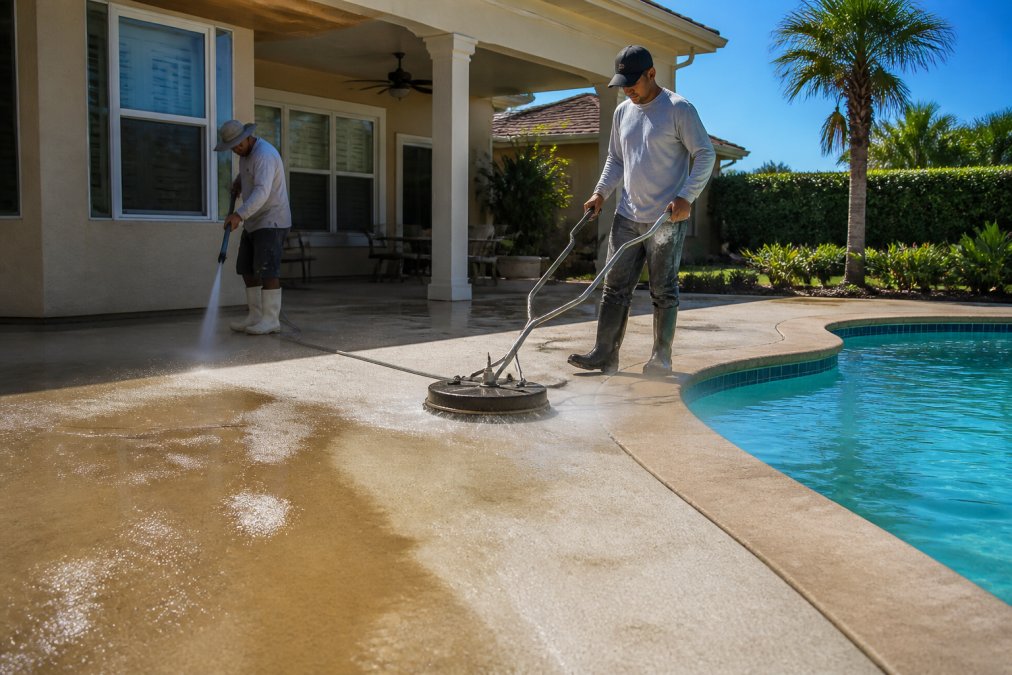
Pressure washing and acid washing are essential preparation steps that remove contaminants, old coatings, and loose concrete. These processes demand expertise; incorrect pressure or chemical application can damage the substrate, requiring expensive remediation. Poor preparation leads to premature coating failure, which is far more expensive than doing it right the first time.
Material Selection
The coating type you select dramatically impacts both cost and performance. Acrylic sealers, epoxy coatings, polyaspartic finishes, and decorative options each carry different price points and durability profiles. Premium coatings cost more upfront but often deliver longer service life, reducing the frequency of resurfacing projects. Material costs also include primers, sealers, and any additives for slip resistance or UV protection. Specialized finishes, such as cool deck coatings designed to reduce surface temperature, add to material expenses.
Pool Deck Coating Options and Their Durability
Different coating systems offer distinct advantages and limitations. Each material type performs differently under Florida’s demanding climate of intense UV exposure and high humidity.
Acrylic Sealers
Acrylic sealers are water-based coatings that provide basic protection and aesthetic enhancement. They’re typically the most affordable option, making them popular for budget-conscious homeowners. Acrylic sealers enhance color, provide modest slip resistance, and offer some UV protection, but they’re not the most durable choice for high-traffic commercial applications.
The main limitation is their shorter lifespan. Most require recoating every 2-3 years in Florida’s climate, where sun exposure and humidity accelerate degradation. If your deck receives moderate use and you’re willing to maintain it regularly, acrylics represent a cost-effective starting point. For decks that experience heavy foot traffic or commercial use, the frequent recoating schedule makes them less economical over time.
Acrylic sealers work best for residential decks with moderate use and homeowners who embrace regular maintenance. Commercial facilities should consider more durable options from the start.
Epoxy and Polyaspartic Coatings
Epoxy coatings offer superior durability compared to acrylics, with typical lifespans of 5-7 years or longer. Epoxy creates a harder, more chemical-resistant surface that handles chlorine exposure and heavy use better than acrylic. Polyaspartic coatings represent the premium tier, offering faster cure times, excellent UV resistance, and lifespans of 7-10 years or more with proper care.
The trade-off is cost. Epoxy and polyaspartic systems cost significantly more than acrylics in both materials and application. Epoxy requires careful surface preparation and specific humidity and temperature conditions during application. Polyaspartic has a short working window and requires specialized equipment and expertise. For commercial properties, HOA-managed pools, and high-traffic residential decks, these systems deliver better long-term value despite higher upfront costs.
Knockdown and Decorative Finishes
Knockdown textures and decorative concrete finishes add visual interest while improving slip resistance. These options allow customization of appearance, from subtle texture to bold colors and patterns. The cost varies widely based on complexity. A simple knockdown texture adds modest cost to a standard coating, while custom patterns or specialty textures increase expenses significantly. Durability depends on the underlying coating system; a decorative finish applied over poor preparation fails just as quickly as a plain coating.
Best Pool Deck Materials for Heat Resistance
Florida’s intense sun creates a genuine problem: concrete pool decks become painfully hot, sometimes exceeding 140°F on peak days. This is a safety concern, especially for children and elderly visitors. Material selection directly impacts surface temperature and usability during summer months.
Cool Deck Technology
Cool deck coatings are specifically engineered to reflect solar radiation rather than absorb it. These coatings incorporate reflective pigments and lighter colors to minimize heat absorption. A properly applied cool deck coating can reduce surface temperature by 20-30°F compared to standard concrete, making the deck comfortable to walk on barefoot even in peak afternoon heat.
Effectiveness depends on proper application and maintenance. Dust accumulation, algae growth, and coating degradation reduce reflectivity over time, so regular cleaning is essential. Cool deck coatings cost more than standard options, but for residential decks where family members spend significant time poolside, the comfort improvement justifies the investment.
Cool deck technology is most effective when combined with light colors and maintained through regular cleaning. Dark colors or neglected surfaces lose much of the heat-reduction benefit.
UV-Resistant Coatings
UV resistance prevents coating degradation and color fading caused by prolonged sun exposure. All quality pool deck coatings should include UV protection, but the level varies. Polyaspartic coatings offer superior UV resistance compared to epoxy, which can yellow or become chalky over time. In Florida’s intense sunlight, UV resistance is fundamental to coating performance. When evaluating coating options, always confirm UV resistance specifications and ask contractors about expected color retention over the coating’s lifespan.
Pool Deck Resurfacing Timeline: What to Expect
Pool deck resurfacing includes not just materials and labor but also the time your pool remains unusable. The complete process typically spans 1-2 weeks for residential decks, though this varies based on deck size, surface condition, and weather.
Preparation and Inspection
The initial phase involves thorough inspection and surface assessment. Contractors evaluate concrete condition, identify cracks or spalling, check for moisture issues, and plan the preparation strategy. This inspection phase typically takes 1-2 days for residential decks.
Surface preparation follows inspection. Pressure washing removes dirt, algae, and contaminants. Acid washing removes residual deposits and opens the concrete pores for better coating adhesion. For decks with failed previous coatings, removal of the old finish may be required. This preparation phase typically requires 2-3 days for average residential decks. During preparation, your pool must remain closed.
Surface Repair and Curing
If concrete repair is necessary, this phase adds time to the overall project. Small cracks may require simple patching, while larger structural issues demand more substantial repair work. Concrete patching materials require curing time before coating application can proceed. Depending on repair scope, this phase may add 3-7 days to the timeline.
Coating application itself typically takes 1-2 days for residential decks. However, curing time is critical; most coatings require 48-72 hours before the deck can safely bear weight. Some polyaspartic coatings cure faster, allowing pool use within 24 hours. During curing, the deck must remain completely undisturbed; foot traffic, water, or debris can compromise the finish.
Weather significantly impacts timeline. Rain during preparation or coating application can extend the project by several days. Florida’s afternoon thunderstorms are common, so contractors plan for potential delays. Humidity and temperature also affect curing time; cooler or more humid conditions slow curing compared to warm, dry conditions.
Concrete Pool Deck Repair Cost Breakdown
Understanding what’s included in concrete repair costs helps you evaluate contractor estimates. Repair expenses vary dramatically based on damage severity.
Crack and Spalling Repairs
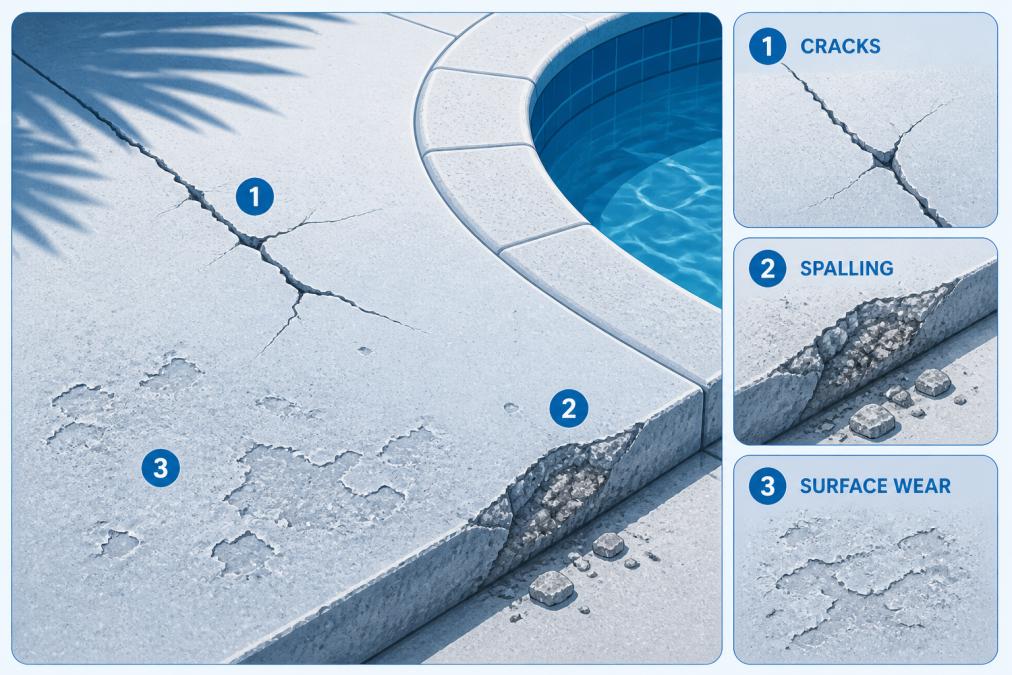
Cracks in pool deck concrete are common, especially in Florida where temperature fluctuations and moisture cycles stress the material. Small surface cracks may only require cleaning and sealing. Larger cracks typically need filling with concrete patching compound or epoxy injection. Deep structural cracks may indicate foundation movement and require professional assessment.
Spalling, where concrete surface flakes or chunks away, is more serious than simple cracking. Repairing spalling requires removing deteriorated concrete, addressing the underlying cause, and applying patching material. Extensive spalling may require partial deck removal and replacement rather than simple patching. Addressing small cracks before they worsen prevents expensive repairs later.
Pressure Washing and Acid Washing
Pressure washing removes surface dirt, algae, and contaminants. This step is essential for coating adhesion but is relatively straightforward.
Acid washing is more aggressive and more expensive. It removes mineral deposits, old coating residue, and opens concrete pores to improve coating penetration. Acid washing demands expertise; incorrect concentration or pressure can damage the concrete substrate. Professional acid washing includes neutralization to remove residual acid, which is essential for coating success.
Never attempt acid washing yourself. Improper technique can permanently damage concrete and create safety hazards. Professional contractors have the equipment, expertise, and safety protocols this process requires.
Signs Your Pool Deck Needs Resurfacing
Recognizing when your deck needs resurfacing prevents safety hazards and avoids more expensive structural damage. Visible cracks, especially ones that are widening or deepening, signal that concrete is deteriorating. Spalling, where concrete chunks flake away, is a clear sign that resurfacing is overdue. Uneven surfaces or sunken areas indicate structural issues that require professional assessment.
Surface discoloration, algae growth, or stubborn staining suggest the coating has failed. If cleaning no longer removes surface discoloration, the protective coating is compromised. Rough, pitted surfaces indicate concrete degradation. A slippery surface, especially when wet, means the coating’s slip-resistance properties are gone.
If your deck is over 7-10 years old and showing any of these signs, professional evaluation is warranted. Early resurfacing prevents more expensive structural repairs.
Maintenance Tips for Long-Term Durability
Proper maintenance extends coating life and prevents premature failure. Clean your deck regularly, weekly in peak season, using a soft brush and mild detergent. Avoid harsh chemicals that degrade coatings. Pressure washing is effective for removing algae and stubborn dirt, but use moderate pressure to avoid damaging the coating.
Address spills and stains promptly. Chlorine, sunscreen, and other pool-related chemicals can damage coatings if left sitting. Rinse the deck regularly with fresh water to remove salt spray and mineral deposits. Inspect your deck regularly for early signs of deterioration. Small cracks or areas where coating is peeling should be addressed immediately before they worsen.
Avoid heavy equipment or furniture with sharp legs that can puncture or gouge the coating. Use protective pads under heavy items. These simple practices significantly extend coating life.
Permitting and HOA Considerations
Pool deck resurfacing projects in many jurisdictions require permits, and HOA-managed communities have specific approval processes. Many local building departments require permits for pool deck work, particularly if the project involves structural repair or significant surface elevation changes. The permitting process typically takes 1-2 weeks, so factor this into your timeline. Some contractors handle permitting; others require homeowners to obtain permits independently.
HOA-managed communities often have architectural review requirements for pool deck projects. Even cosmetic improvements may require approval before work begins. Contact your HOA board before requesting contractor estimates to understand approval processes and any restrictions on materials or finishes.
Professional contractors familiar with local requirements navigate these processes efficiently. This is another advantage of working with established local contractors who understand local permitting requirements and maintain relationships with building departments.
Pool deck resurfacing represents a significant investment in your property’s safety, aesthetics, and functionality. Understanding the factors that influence pool deck resurfacing cost helps you make informed decisions. Pool Decks R Us specializes in concrete pool deck repairs and resurfacing that deliver lasting results. Our in-house crew handles every phase of your project with the expertise and attention to detail that ensures your deck looks great and performs reliably for years to come. Get a quote from Pool Decks R Us today and discover why homeowners trust us to get the job done right the first time.
Frequently Asked Questions
How much does pool deck resurfacing cost?
Pool deck resurfacing cost varies based on square footage, surface condition, material choice, and labor requirements. Factors like existing cracks, spalling, and whether you need acid washing or pressure washing affect the total. For an accurate estimate tailored to your deck's specific condition, contact a local contractor for an inspection and quote.
What's the best material for pool deck resurfacing in humid climates?
Polyaspartic and epoxy coatings perform well in humid Florida conditions due to their UV resistance and durability. Cool deck materials and coatings with high heat reflection are ideal if barefoot comfort matters. Acrylic sealers are a budget-friendly option but require more frequent reapplication. Your choice depends on durability expectations and heat resistance priorities.
How long does pool deck resurfacing last?
Durability depends on the material and maintenance. Acrylic sealers typically last 2-4 years before reapplication. Epoxy and polyaspartic coatings can last 7-10 years or longer with proper care. Cool deck finishes and UV-resistant coatings extend lifespan in intense sun. Regular cleaning, prompt crack repair, and appropriate sealing maintenance significantly improve longevity.
How long does the pool deck resurfacing process take?
Most resurfacing projects take 3-7 days depending on deck size and condition. Surface preparation, including pressure washing and crack repair, typically takes 1-2 days. Coating application and curing time varies by material: acrylic finishes cure faster (24-48 hours), while epoxy and polyaspartic coatings may need 5-7 days for full cure. Your pool may be unusable during this period.
Can deep cracks and spalling in concrete be repaired, or does the deck need replacement?
Most cracks and spalling can be repaired without full replacement. Contractors fill cracks, repair spalled areas, and prepare the surface before resurfacing. Structural damage affecting the deck's foundation may require partial removal, but complete replacement is rarely necessary. A professional inspection determines whether repair or replacement is the right choice.
Do I need a permit to resurface my pool deck?
Permit requirements vary by location and property type. Many residential pool deck resurfacing projects don't require permits, but HOA communities often have approval processes. Commercial properties typically need permits. Check with your local building department and HOA before work begins to avoid compliance issues and ensure your contractor follows all regulations.
This article was written using GrandRanker